If you're choosing doors or windows… this matters
When you start getting quotes, you’ll hear terms like Europe, Akari, or traditional systems… and honestly, if you’re not in the industry, they all sound the same..
But they’re not.
Each system has real differences in airtightness, durability, design, and price, and choosing the right one can save you problems (and money) later...
Let me break it down simply
Europe System: high performance and premium finish
This is the most advanced system..
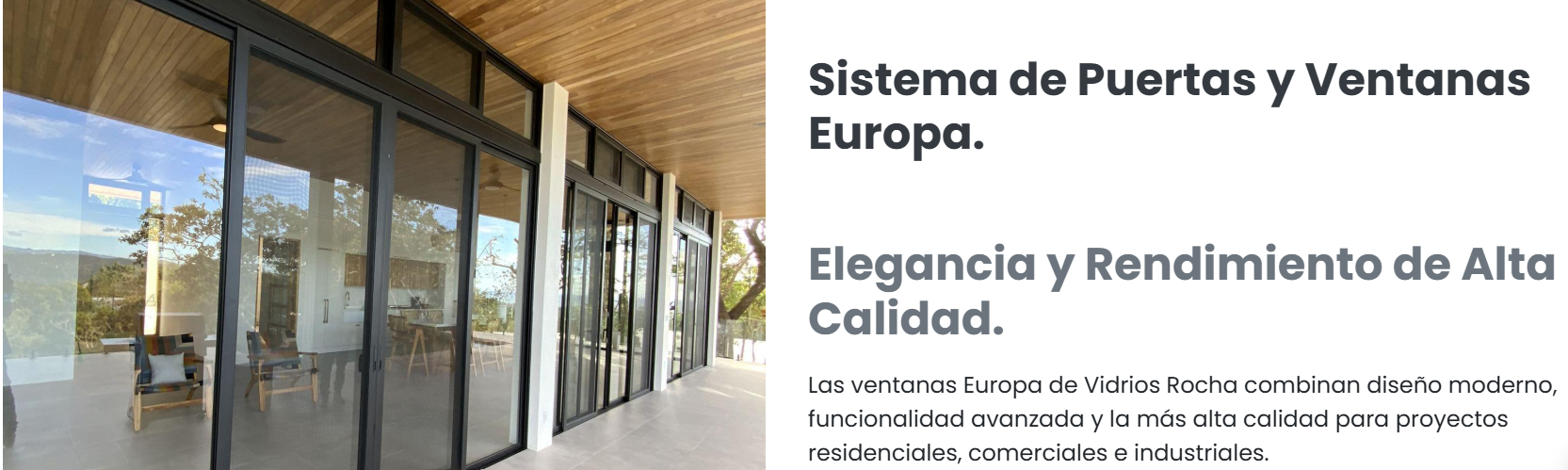
What really sets it apart?
- Stronger aluminum profiles
- Airtight sealing systems
- Double glazing compatibility (insulated glass)
- Higher manufacturing precision
Pros
✔Excellent sound and thermal insulation
✔ Máxima hermeticidad (no entra polvo ni aire)
✔ Longer lifespan
✔ Clean, modern aesthetics
Cons
✖ Higher upfront cost
👉 Bottom line: built for long-term comfort and quality..
Ver sistema Europa
Akari System: the smart middle ground
Akari is a step up from traditional systems. It’s not premium, but it’s noticeably better..
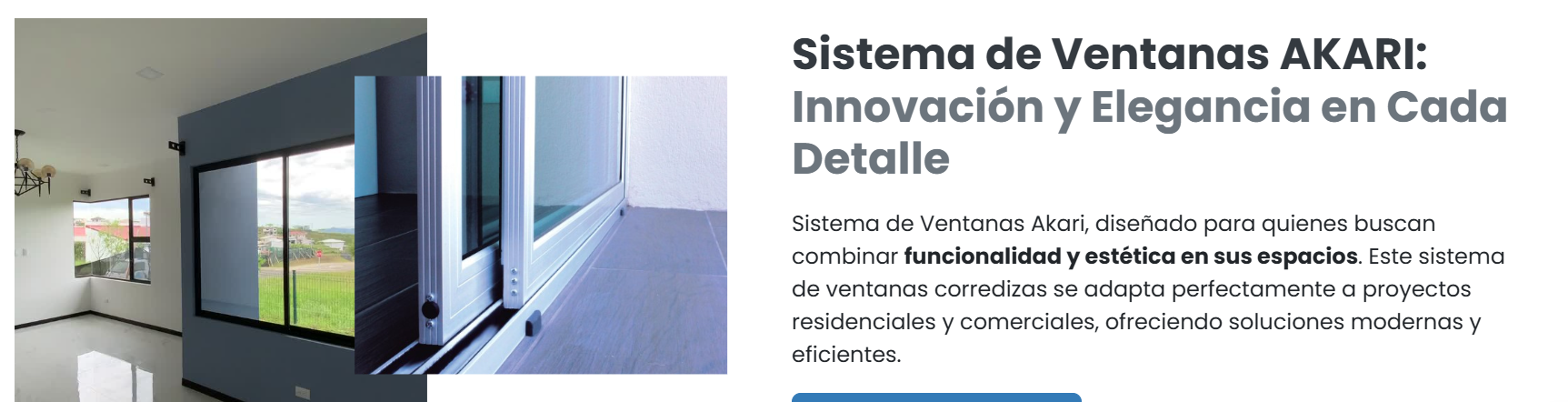
What makes it different?
- Improved profile design
- Better sealing components
- More structural stability
Pros
✔ More structural stabilityl
✔ More durable
✔ Balanced cost-performance ratio
Cons
✖ Not as airtight as Europe
✖ Limited design options
👉Bottom line: a solid balance between cost and performance.
Traditional System: the basic option everyone knows
This is the most common and budget-friendly system

How does it work?
- Simple aluminum frames
- Basic locking systems
- Low sealing performance
Pros
✔ More affordable
✔ Quick installation
✔Works for simple or temporary projects.
Cons
✖ More air, dust, and noise leakage
✖ Lower thermal insulation
👉 Bottom line: it works, but it’s basic..
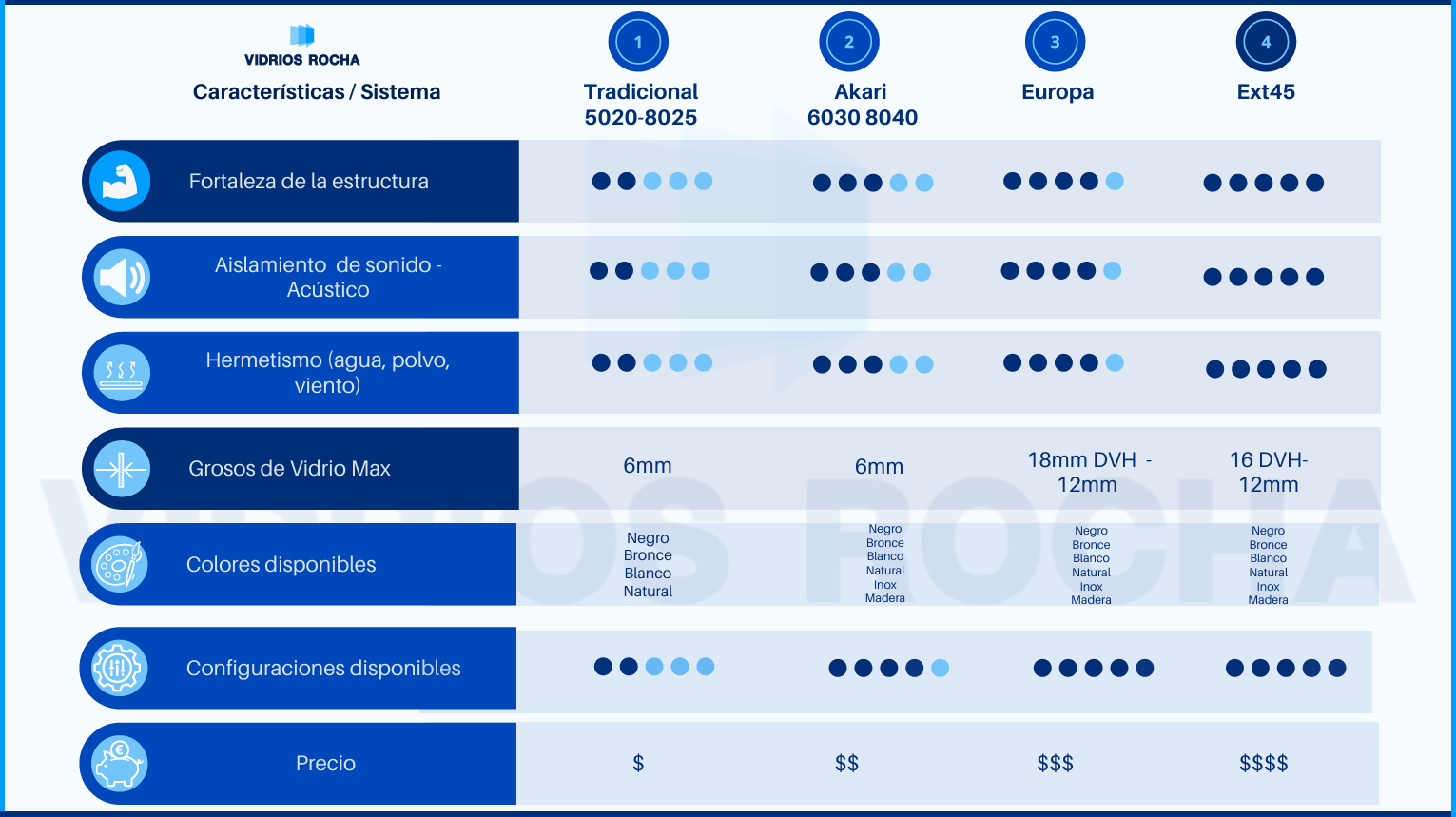
Key difference: Europe vs Akari
Simple and practical:
- Europe = top performance, maximum airtightness
- Akari = good performance, controlled cost
👉 Choose Europe if you want comfort and efficiency
👉 Choose Akari if you want a balance
Key difference: Akari vs Traditional
Here the improvement is very noticeable:
- Akari offers better sealing and durability
- Traditional is more basic and functional
👉 Choose Akari to avoid future issues
👉Choose Traditional if budget is your main concern
Which one should you choose? (quick answer)
According the use
- 🏠 Long-term home → Europe
- 🏢 Balanced budget project → Akarii
- 🛠 Basic or temporary use → Traditionall
One thing most people don’t tell you.
Beyond the system itself, what really makes the difference is::
- Proper installation
- Accurate measurements
- Technical planning
A good system poorly installed will always fail.
FAQs
Is Europe worth the extra cost?
Yes, especially for comfort, insulation, and durability..
Is Akari good enough for a house?
In many cases, yes—especially if you want a balance..
Is the traditional system bad?
Not bad, just more basic..
Can I upgrade later?
Yes, but it requires removal and reinstallation.
Does glass type matter?
A lot. System + glass work together..
Which one blocks noise better?
Europe, especially with double glazing.
Conclusion: it’s not just price—it’s a smart decision
Choosing between Europe, Akari, or traditional systems isn’t just about budget..
It’s about:
- comfort
- durability
- long-term value
Once you see it that way, the choice becomes much clearer.
Más de 30 años de experiencia en instalación y fabricación.
Permítanos presentarle nuestras soluciones, garantizando a su proyecto un servicio profesional y productos de calidad.